
Common problems with West Kensington stair access for removals
Posted on 22/06/2026
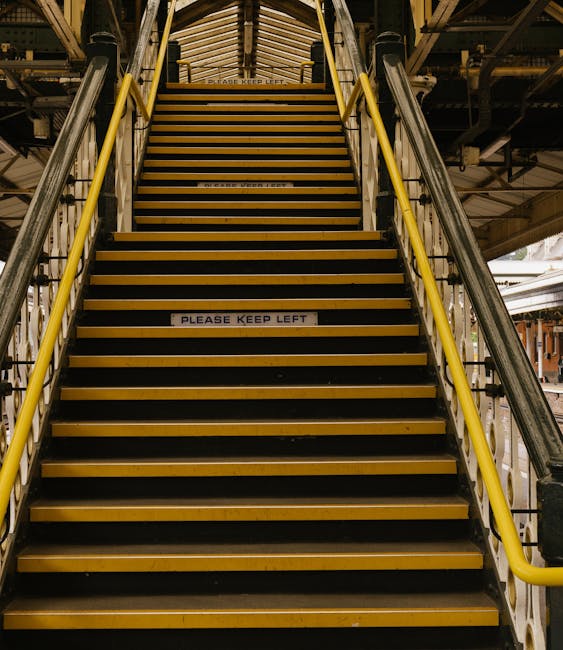
If you are moving in or out of a West Kensington flat, stair access can turn a straightforward removal into a slow, sweaty, and slightly nerve-jangling job. That is especially true in older mansion blocks, converted townhouses, and upper-floor apartments where the stairs are narrow, steep, awkwardly turned, or simply not designed with sofas in mind. This guide looks at the common problems with West Kensington stair access for removals, why they matter, and what you can do to keep the day calm, safe, and on schedule.
Truth be told, most moving headaches in this part of London are not about the actual distance travelled. They are about the first few metres inside the building. A tight landing, a bannister in the wrong place, a low ceiling, or a stairwell shared by neighbours can change the whole plan. The good news? With proper preparation, most of these issues are manageable.
![The exterior of a retail shop on a city street features a white building with large windows, two of which have flower boxes beneath them. The shop displays colorful clothing and accessories, with a pink dress on a mannequin visible through the open entrance. A white bicycle with a basket attached is parked on the pavement in front of the shop, near a small patch of grass, and a white A-frame sign is positioned on the sidewalk. To the right, part of another storefront with a teal facade and an awning can be seen. The shop sign reads 'the west village,' and the address number '35' is visible above the door. The scene is well-lit with natural daylight, providing a clear view of the storefront's facade and the surrounding street details. This image reflects a typical urban shopping area, relevant to house removals and moving services in West Kensington, such as those offered by [COMPANY_NAME], emphasizing the importance of planning for stair access and logistical considerations during home relocation.](/pub/blogphoto/common-problems-with-west-kensington-stair-access-for-removals1.jpg)
Why Common problems with West Kensington stair access for removals Matters
Stair access matters because it affects time, safety, cost, and the likelihood of damage. In West Kensington, many homes are in multi-storey properties with shared entrances, compact stairwells, and turns that are perfectly fine for daily life but awkward for moving day. A wardrobe that clears a stair on paper may still catch on a wall corner when you try to angle it through a narrow landing. It happens all the time.
From a practical point of view, stair access issues can lead to:
- slower loading and unloading
- extra labour if items need to be carried piece by piece
- increased risk of knocks to walls, banisters, and flooring
- greater strain on movers, which can raise safety concerns
- delays if furniture needs to be dismantled on site
And because stair access problems are often discovered late, they can also create awkward conversations about timing and pricing. If you have ever watched a sofa hover halfway around a landing while three people quietly rethink their life choices, you will know the feeling.
For people moving into flats, shared houses, or older period properties, this is not a minor detail. It is one of the main variables that shapes the whole move. If you are still early in the planning stage, it can help to read broader background material such as the site's flat removals guidance for West Kensington or the wider services overview to understand how different move types are usually handled.
How Common problems with West Kensington stair access for removals Works
In removals, stair access is assessed by looking at the route from the property entrance to the van. That sounds simple, but the devil is in the details: stair width, turning radius, head height, number of flights, surface condition, handrail placement, and whether the staircase is shared or private.
Here is how the process usually works in real life:
- Initial access check - You or the removal team look at the staircase, front door, landings, and any awkward corners.
- Item mapping - Larger objects are matched against the route. Sofas, wardrobes, beds, fridges, and mirrors are the usual troublemakers.
- Risk points are noted - Tight bends, uneven steps, low ceilings, and fragile plasterwork are identified.
- Handling plan is set - The team decides what can be carried, what should be dismantled, and what may need protective wrapping.
- On-the-day adjustments - If reality differs from the plan - and let's face it, it sometimes does - the team may change the carry route, split loads, or reconfigure furniture.
In West Kensington, stair access problems often show up in converted buildings where original layouts were never meant for modern furniture. A staircase may be beautiful, with all that old charm and polished banister wood, but the same staircase can be awkward when a double mattress needs to pivot on the second landing.
If you are moving a particularly heavy item, such as a piano or a bulky wardrobe, specialised handling becomes even more important. A dedicated piano removals service is a good example of how the right equipment and planning can make a difficult stair route far safer.
Key Benefits and Practical Advantages
Planning for stair access problems does more than protect the walls. It makes the whole move feel controlled rather than chaotic. That matters because moving day is already full of small decisions, and nobody needs more surprises at 8:15 in the morning.
The main benefits are:
- Fewer delays - when access is checked properly, loading tends to run more smoothly.
- Less damage - stair rails, plaster, doors, and furniture all benefit from better preparation.
- Safer lifting - movers can use better posture and better team coordination.
- Clearer pricing - access issues can be discussed before the quote is finalised.
- Better neighbour relations - shorter blockages in shared hallways and landings usually means fewer complaints.
There is also a calmer emotional payoff. When stair access has been thought through, you are less likely to spend the day standing by the hallway muttering, "surely it will fit if we just tilt it a bit." Sometimes it will not. Better to know that early.
Expert summary: In West Kensington, the best removals are rarely the fastest on paper; they are the ones that account for the stairwell before the van even arrives.
If you want to understand how the business approaches jobs with access constraints, the about us page gives useful context on the company's approach, and the insurance and safety information is worth reading when the move involves heavy or awkward items.
Who This Is For and When It Makes Sense
This guidance is relevant for anyone moving in West Kensington, but some people will feel the impact more than others.
Homeowners and tenants in upper-floor flats
If you live on the third or fourth floor, even a modest move can become physically demanding. A single long carry up several flights may not sound dramatic until you are doing it with boxes, bedding, lamps, and one oddly shaped chair that never seems to take the hint.
Students moving in or out of shared accommodation
Student moves often happen quickly, with less furniture but more boxes, more stairs, and less time. For that kind of move, a smaller vehicle or a flexible team such as a man and van option may suit the job, especially where the property has tight stair access and limited parking.
Families moving larger furniture
Families tend to have more bulky items: cot beds, wardrobes, dining tables, toy storage, and sometimes an old sofa that has somehow survived three moves already. If that sounds familiar, house removals in West Kensington may be the better fit, because larger teams and more structured planning can make stair navigation far easier.
Businesses and office movers
Office removals are often less about wardrobes and more about filing cabinets, desks, monitors, and awkward equipment. If your workspace is above ground level or inside a converted building, stair access becomes a scheduling issue as much as a lifting issue. See the relevant office removals service if this is your situation.
Anyone on a tight deadline
When you need speed, stair access is one of the first things that can trip you up. If the move has to happen same day, the team may need to work around limited time and difficult access, which is why same-day removals are only really sensible when the access situation has been checked properly.
Step-by-Step Guidance
Here is a practical way to deal with stair access before it becomes a problem. Nothing fancy. Just the stuff that actually helps.
- Measure the route
Check stair width, landing space, doorway clearances, and ceiling height on each flight. Measure the widest and tallest items too, not just the obvious ones. A sofa arm can be the part that catches, not the sofa body. - Photograph the staircase
Take pictures from bottom to top. Include corners, bannisters, radiators, and any tight turns. A few photos can save a lot of guesswork later. - Identify the largest items first
Do not start with boxes. Start with the awkward things: wardrobes, mattresses, desks, mirrors, bookcases, and anything heavy but slightly unstable. - Decide what should be dismantled
Some furniture is much easier to move in pieces. If the stairwell is tight, partial dismantling can be the difference between a clean move and a scratched wall. - Protect the building
Use door protectors, blankets, rail covers, and floor protection where needed. Shared stairwells in West Kensington can be cramped, and damage is much easier to cause than to repair. - Plan the order of carry-out
Load the hardest items when the team is fresh. Save the smaller boxes for the end. That sounds obvious, but in the rush of the day, it is easy to forget. - Keep the stairs clear
One bag on the landing is one bag too many. Hallways need to stay open for safe movement. - Reassess on arrival
If the access looks tighter in person than it did on the phone, adjust quickly. Good movers adapt rather than forcing the issue.
If you are still gathering packing materials and want to organise the contents of each room properly before move day, the packing and boxes service can be a practical support point rather than an afterthought.
Expert Tips for Better Results
There are a few small choices that make a big difference with stair access. These are the sort of things people only learn after one difficult move, which is why I like sharing them early.
- Use colour-coded labels so movers know which boxes are light, fragile, or destined for a specific floor.
- Keep one landing free during loading so nobody has to balance items while waiting for someone else to move.
- Remove loose parts from beds, shelving, and tables before the carry begins. Handles, shelves, and detachable legs are the usual culprits.
- Check the stair surface for dust, moisture, or worn edges. Slippery steps can turn a routine carry into a safety problem very quickly.
- Book early if parking is tight because access problems outside the building can be just as disruptive as the staircase itself. For some local moves, the insights in parking tips near Olympia are a useful nearby reference.
- Tell the movers about oddities like split-level landings, internal doors that swing inward, or a narrow communal entrance. Small details matter.
One thing we notice quite often: the building looks manageable until you stand inside with the item in your hands. That is usually when everyone goes a bit quiet. Fair enough, really.
If you are moving something especially delicate or expensive, such as artwork or fragile furniture, choose a team that can explain how they will protect the item during stair carries. A good furniture removals service should be able to discuss wrapping, lifting, and route planning without making it sound like guesswork.
Common Mistakes to Avoid
A lot of stair-access issues are avoidable. Not all of them, of course. Buildings do enjoy being awkward. But many common mistakes can be reduced with a bit of foresight.
- Assuming the movers will "just manage" - if the stairs are difficult, say so upfront. Silence tends to create surprises.
- Measuring only the hallway - the landing and corner turns are often the real bottlenecks.
- Forgetting the communal stairwell - in shared buildings, access is not just your staircase; it is everyone's staircase.
- Ignoring heavy items - the one item you think is harmless can become the one item that needs dismantling.
- Leaving boxes on stairs - even temporarily, this increases trip risk and slows the whole job down.
- Booking too little time - stair access problems almost always add minutes, and those minutes add up.
A small but important note: if a removal company sounds vague about access, ask them to be specific. They should be able to explain what they need from you, and what they will do if the staircase turns out to be tighter than expected. That is a normal part of professional planning, not a fuss.
For those comparing providers or trying to understand what is included, the pricing and quotes page can help you see how access complexity may affect the booking conversation.
Tools, Resources and Recommendations
You do not need specialist equipment for every move, but certain tools make stair access jobs much easier. The right kit reduces strain and helps protect both property and belongings.
| Tool or resource | What it helps with | Why it matters in stair access |
|---|---|---|
| Furniture blankets | Protecting corners, frames, and surfaces | Useful when narrow turns increase the chance of scrapes |
| Ratchet straps | Securing items in a controlled carry | Helps keep awkward objects steady on stairs |
| Protective floor covering | Shielding hallways and step surfaces | Reduces wear in shared or historic buildings |
| Simple measuring tape | Checking widths and clearances | Stops guesswork before moving day |
| Furniture sliders or dismantling tools | Preparing heavy furniture for transport | Can prevent a badly judged lift on a tight staircase |
| Detailed inventory list | Planning load order and item priority | Helps the team decide what moves first |
For larger or more complex moves, you may also want short-term storage if stair access issues mean the move has to be split across two days. In that case, storage in West Kensington can help reduce pressure on the schedule.
It is also worth checking the company's wider operational standards. The health and safety policy and recycling and sustainability approach are useful indicators of how carefully the team handles both risk and waste.
Law, Compliance, Standards, or Best Practice
There is no single rulebook for stair access in removals, but there are clear best-practice expectations. In the UK, removal work should be carried out with reasonable care for workers, the property, and anyone else who may be affected by the move. That includes safe lifting, clear walkways, and proper handling of obstacles.
In practical terms, that means movers should:
- avoid unsafe lifting where possible
- work in pairs or teams for large items
- protect shared surfaces and communal areas
- communicate clearly before taking furniture around tight corners
- pause and reassess if the route becomes unsafe
For customers, the important thing is simple: give accurate access information. If the stairwell is narrow, if the building has no lift, if parking is awkward, or if there are time restrictions, those details should be shared early. It is not about being difficult. It is about allowing the move to be planned properly.
You should also review contractual and practical details before booking. The company's terms and conditions and payment and security information are sensible reading if you want to understand what is covered and how the booking is handled.
Where a building has accessibility needs, the accessibility statement may also offer helpful context on how the business thinks about access and customer support. It is not the most glamorous part of planning a move, but it is part of getting the job done properly.
Options, Methods, or Comparison Table
Not every stair-access problem needs the same approach. Sometimes a full team is the right answer. Sometimes a smaller vehicle with a more flexible crew is enough. The best choice depends on the property, the furniture, and how much time you have.
| Approach | Best for | Pros | Limitations |
|---|---|---|---|
| Full house removal team | Large family moves, many bulky items | More hands, better speed, structured handling | Usually more expensive than smaller options |
| Man and van | Smaller flats, lighter loads, student moves | Flexible, compact, often ideal for tight stairwells | May not suit very large or heavy items |
| Removal van with crew | Moderate-sized moves with access challenges | Balances capacity and flexibility | Still needs careful item planning |
| Specialist item removal | Pianos, antiques, unusually heavy furniture | Extra expertise and handling equipment | Not designed as a whole-home solution |
| Split move with storage | When stair access or timing makes one-day moving unrealistic | Less pressure, more control | Requires extra coordination |
If you are unsure where your move fits, a smaller-scale service like man with a van in West Kensington can work well for compact properties, while a broader removal services overview is useful if you are comparing multiple options.
Case Study or Real-World Example
Here is a simple real-world style example based on a common West Kensington scenario.
A tenant moves out of a second-floor flat in a converted Victorian building. The staircase is narrow, the landing turns sharply, and the sofa is wider than expected once the protective covers are added. At first glance, it looks manageable. Then the movers take the sofa halfway up the stairs and realise the landing turn is tighter than the measurements suggested. Not a crisis, but not ideal either.
The team pauses, reassesses, and decides to remove the feet from the sofa and carry it on its side with extra wrapping at the corners. A wardrobe is dismantled before moving. Boxes are carried last. Because the route was checked properly, the team already knew the stairwell was fragile and the hallway needed protection. The move still takes longer than a ground-floor job, but it stays controlled, and the walls stay intact. Everyone breathes easier by lunchtime.
That is the pattern, honestly. Stair access problems are rarely dramatic on their own. They become dramatic only when nobody plans for them. If you want to see how these issues fit into a larger moving picture across the area, local reading such as the narrow-access flat removals checklist and local moving tips for High Street Kensington can be helpful background.
Practical Checklist
Use this before moving day. It is short for a reason - you will actually use it.
- Measure every staircase, landing, and doorway on the moving route
- Photograph the access points from top and bottom
- List the biggest and heaviest items first
- Identify anything that can be dismantled before the move
- Check whether the stairwell is shared or private
- Confirm parking arrangements for the van
- Clear hallways, steps, and landings of clutter
- Protect walls, floors, and bannisters where possible
- Tell the removals team about tight turns or low ceilings
- Plan extra time for carrying items up or down stairs
- Keep a toolkit nearby for last-minute dismantling
- Decide where fragile items will be loaded and unloaded
If you are moving at short notice and need to organise things quickly, it may be worth checking whether same-day removals are suitable for your access situation. The short answer is: sometimes yes, sometimes no. It depends on the staircase, the load, and how realistic your timing is.
Get a free quote today and see how much you can save.
Conclusion
The common problems with West Kensington stair access for removals are predictable, which is actually good news. Predictable problems can be planned for. Narrow stairs, sharp landings, shared entrances, and bulky furniture are all manageable when they are identified early and treated seriously rather than brushed aside.
So if you are preparing for a move in the area, focus on the route before the furniture. Measure first. Photograph the access. Be honest about the awkward bits. It is a small amount of effort that can save a lot of time, money, and stress on the day. And, to be fair, a smoother move is one of those rare small joys that stays with you longer than expected.
For more insight into the company, its move types, and the practical support available across West Kensington, browse the relevant service pages and guides, then plan from there with a calm head.
![The exterior of a retail shop on a city street features a white building with large windows, two of which have flower boxes beneath them. The shop displays colorful clothing and accessories, with a pink dress on a mannequin visible through the open entrance. A white bicycle with a basket attached is parked on the pavement in front of the shop, near a small patch of grass, and a white A-frame sign is positioned on the sidewalk. To the right, part of another storefront with a teal facade and an awning can be seen. The shop sign reads 'the west village,' and the address number '35' is visible above the door. The scene is well-lit with natural daylight, providing a clear view of the storefront's facade and the surrounding street details. This image reflects a typical urban shopping area, relevant to house removals and moving services in West Kensington, such as those offered by [COMPANY_NAME], emphasizing the importance of planning for stair access and logistical considerations during home relocation.](/pub/blogphoto/common-problems-with-west-kensington-stair-access-for-removals3.jpg)

